
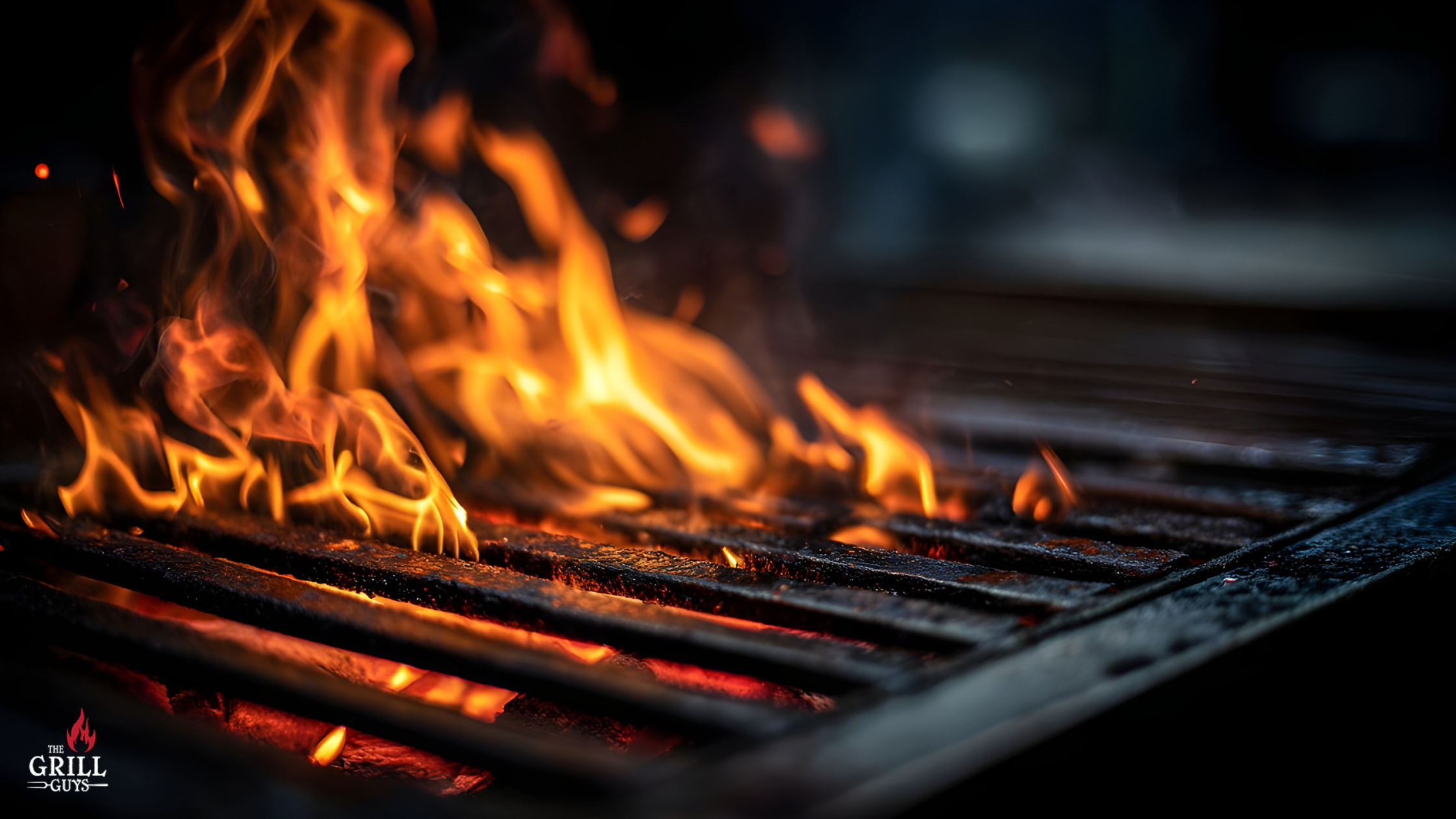
Most grill fires begin quietly—inside a grease tray that has not been emptied since spring or around burner tubes coated with hardened grease from months of cooking.
By the time football season is in full swing, a Texas grill may already be carrying an entire summer’s worth of buildup. Unfortunately, a can of degreaser from the hardware store is not always enough to remove it.
This guide explains what grill degreasers can do, where they fall short, and why hidden grease buildup is more than an inconvenience. For premium grills and outdoor kitchens, it can become a serious fire hazard and lead to expensive equipment damage.
Key Takeaways
- Grease fires often begin in areas that surface cleaning cannot reach, including burner assemblies, firebox walls, and grease trays.
- Store-bought degreasers can remove visible grime but rarely address hidden buildup inside premium built-in grills.
- Accumulated grease can clog burner ports, create uneven heat, damage components, and shorten the life of an expensive grill.
- Once buildup has accumulated for several months, a spray-and-wipe cleaning is usually no longer enough.
- Professional cleaning can uncover corrosion, failing igniters, damaged burners, and other developing problems before they become costly repairs.
What Grill Degreaser Actually Does
Grill degreasers are formulated to break down grease and carbon deposits so they can be lifted away rather than remaining baked onto metal surfaces.
For routine cleaning, a quality degreaser can work well on cooking grates, exterior surfaces, and other areas that are easy to reach with a brush or cleaning cloth.
The problem is that grease does not remain neatly on the surface. It drips into the firebox, collects around burners and heat shields, and eventually hardens into carbon deposits in areas that a sponge or grill brush cannot reach.
A spray degreaser and scrub pad may clean what you can see, but they do very little for the buildup underneath.
That distinction becomes even more important with premium equipment. Built-in grills from brands such as Lynx, DCS, Fire Magic, and Alfresco often contain enclosed areas where grease and debris can accumulate unnoticed. As a result, the hidden-buildup problem can be even greater on the grills that are most valuable and expensive to replace.
Where Store-Bought Degreasers Fall Short
Walk down almost any grill-cleaning aisle, and the promises on the labels sound similar: dissolves grease, restores shine, and works in minutes.
What those labels often do not explain is that cleaning a grill safely involves much more than spraying its visible surfaces.
Not Every Degreaser Is Safe for Every Surface
Some all-purpose formulas are harsh enough to discolor stainless steel, damage protective finishes, or wear down porcelain-coated grates with repeated use.
That is especially concerning when cleaning a premium grill that may cost more than many indoor kitchen appliances.
Cleaning the Outside Does Not Clean the Inside
The exterior and cooking grates may be the most visible parts of a grill, but they are not necessarily where the greatest fire risk develops.
Grease commonly accumulates around:
- Burner tubes
- Heat shields and flavorizer bars
- Drip trays
- Grease-management systems
- Firebox walls
- Ignition components
A grill can look clean from a few feet away while still holding months of hardened grease below the cooking surface.
Degreaser Cannot Identify Mechanical Problems
A cleaning product cannot tell you that a burner is corroding, an igniter is failing, a gas connection is loosening, or a component is nearing the end of its useful life.
Those problems are more likely to be discovered when the grill is disassembled and inspected by someone who knows what to look for.
Simply put, “clean enough to look good” is not always the same as “clean enough to operate safely.”
Why Grease Buildup Is a Real Fire Risk
Grease is fuel. When enough of it accumulates near burners or inside an enclosed firebox, high cooking temperatures can ignite it and turn a routine cookout into a dangerous fire.
The longer a grill goes without a deep cleaning, the greater the risk becomes. In Texas, buildup can develop particularly quickly because many grills are used throughout most of the year rather than being stored through a long winter.
Football season can create the perfect conditions for a grease fire. Tailgates, weekend games, and back-to-back cookouts during September and October increase grill use at the same time the equipment may still be carrying residue from an entire summer.
The combination of heavy use, high temperatures, and existing buildup makes fall one of the most important times to think about grill safety.
Grease accumulation also affects everyday performance. It can:
- Clog burner ports
- Cause uneven flames and uneven cooking
- Create excessive flare-ups
- Place additional stress on internal components
- Shorten the life of burners, igniters, and heat shields
- Affect the flavor and quality of food
When DIY Cleaning Reaches Its Limit
Basic cleaning after each use is an excellent habit. Grill owners should regularly scrape the cooking grates, empty the grease tray, remove loose debris, and wipe down exterior surfaces.
Those steps help slow the accumulation of grease, but they do not replace periodic deep cleaning.
A true deep cleaning generally requires:
- Removing the cooking grates and internal components
- Cleaning the burner area and firebox
- Degreasing heat shields, trays, and grease-management components
- Clearing blocked burner ports when appropriate
- Inspecting burners, igniters, valves, and connections
- Reassembling and testing the grill
DIY cleaning reaches its practical limit when the grill must be disassembled or when the owner does not know how to recognize damaged, corroded, or unsafe components.
That is where professional grill cleaning becomes valuable—not as a replacement for routine care, but as the deeper service that addresses what normal maintenance cannot.
What Professional Grill Degreasing Covers
A professional cleaning should involve much more than spraying the grill and wiping down the grates.
A trained technician can remove cooking grids, burners, heat shields, drip components, and other accessible internal parts so the hidden areas of the grill can be properly cleaned.
The process may include:
- Full or partial disassembly, depending on the grill
- Removal of hardened grease and carbon buildup
- Cleaning methods appropriate for stainless steel, porcelain, cast iron, and other materials
- Cleaning of the firebox and grease-management areas
- Inspection of burners and burner ports
- Inspection of igniters and ignition components
- Identification of corrosion, wear, or damaged parts
- Reassembly and operational testing
Many grill owners do not realize how much grease has accumulated below the cooking grates until the internal components are removed.
The Problem With One-Time Cleaning
A one-time deep cleaning solves the buildup that exists today, but it does not address the pattern that caused it.
Grease begins accumulating again as soon as the grill is used. It may build more slowly during periods of light use, but the cycle continues.
That is the purpose of a recurring grill-maintenance program. Rather than waiting until grease has reached a hazardous level, the grill is placed on a regular cleaning and inspection schedule.
Routine maintenance helps prevent owners from reaching the point where they suddenly need an urgent cleaning, an expensive repair, or a complete grill replacement.
Protecting a Premium Investment
A grill costing $3,000 to $15,000—or an outdoor kitchen costing $15,000 to $75,000—deserves more protection than a quick spray of store-bought degreaser and the hope that nothing serious is developing underneath.
The gap between a grill that looks clean and one that is actually clean is where grease fires, corrosion, and mechanical wear can quietly develop.
The Grill Guys USA serves Greater Houston, College Station, Austin, San Antonio, the Texas Hill Country, and Lubbock. Our technicians provide honest assessments based on what the grill actually needs—not unnecessary repairs or upselling.
Professional grill cleaning begins with the cooking grates, but it does not stop there. We work through the grill from the inside out to remove buildup, inspect important components, and help protect the equipment.
We’ll clean the mess out of your grill. More than 10,000 grills serviced across Texas and counting.
Frequently Asked Questions
Is a strong grease smell a sign that my grill is a fire hazard?
Not necessarily an immediate hazard, but a persistent grease smell can indicate that buildup has reached the burner area, firebox, drip system, or other internal components.
That is a sign that the grill should be inspected and cleaned before the buildup becomes more serious.
How often should grease be cleaned out of a grill?
The proper schedule depends on how frequently the grill is used, what types of food are cooked, and whether it remains outdoors year-round.
Grills that are used regularly may need a thorough cleaning every three to six months. Heavily used grills may require more frequent service. Most manufacturers recommend twice per year, but again, there are various factors that will determine if this is enough or too much.
Can I soak the parts or use a pressure washer instead?
Soaking removable parts can help loosen buildup, but the parts must be thoroughly rinsed, dried, and properly reinstalled before the grill is used.
Pressure washing is not always a safe shortcut. High-pressure water can damage burners, igniters, electrical components, finishes, and insulation. It can also force grease and debris farther into tight spaces rather than removing it.
These methods should only be used when they are appropriate for the specific component and grill design.
Is it safe to use engine degreaser on a grill?
No. Engine degreasers and other products not intended for cooking equipment or food-contact surfaces may leave unsafe residue and can damage stainless steel, porcelain coatings, and other grill materials.
Always use products specifically intended for grills and follow the manufacturer’s instructions.
Do pellet grills require a different cleaning process than gas grills?
The buildup occurs in different places, but the basic concern is the same.
Pellet grills often collect grease and ash around the drip tray, grease bucket, burn pot, and lower cooking chamber. Gas grills commonly accumulate grease around burners, heat shields, drip trays, and the firebox.
Both types require regular cleaning to reduce fire risk and maintain proper performance.
How is professional degreasing different from store-bought cleaning?
Store-bought degreasing generally focuses on surfaces that can be reached without taking the grill apart.
Professional cleaning addresses internal components and hidden areas such as the firebox, burners, heat shields, drip systems, and grease-management components. It also provides an opportunity to inspect the grill for corrosion, wear, and failing parts.
What is included in a cleaning from The Grill Guys USA?
Our cleaning process includes disassembly of accessible grill components, deep cleaning and degreasing using methods appropriate for each surface, cleaning of internal grease and carbon buildup, and inspection for issues such as corrosion or damaged components.
The exact process may vary depending on the grill’s brand, model, condition, and construction.
Is professional cleaning worth it if I already clean my grill?
Yes. Regular DIY cleaning is important and should continue, but most routine cleaning does not reach the firebox, burner assemblies, and other internal areas where grease and carbon accumulate.
Professional cleaning complements regular maintenance by addressing the buildup that normal scraping and wiping cannot reach
Deal With Grease Before Football Season Peaks
Waiting until grease buildup becomes visible—or until a fire occurs—means waiting too long.
Protect your grill, your outdoor kitchen, and the people around it by cleaning the equipment before peak cooking season.
Join our Flame Care Grill Maintenance Program
Place your grill on a recurring schedule so grease and carbon buildup can be addressed before they become a hazard.
Schedule Your First Cleaning
Schedule your first cleaning and get a full professional cleaning, internal inspection, and degreasing service.
Talk to a Grill Technician with The Grill Guys
Houston: (281) 586-2100
Hill Country: (512) 212-1230
Lubbock: (806) 301-2324
About the Author
Tony Thomas is the co-owner of The Grill Guys USA, a BBB A+ accredited (since May 2023) and BBB Winner of Distinction grill cleaning and repair company. Tony founded the company in 2020 with two high school friends who shared a passion for outdoor cooking, and has spent the last six years building Texas’s premier mobile grill restoration service. Tony and his team built a cleaning system that brings professional-grade grill restoration directly to customers’ homes in Greater Houston, Austin, San Antonio, the Hill Country, College Station, and Lubbock. The Grill Guys USA is a partner of many grill manufacturers.