
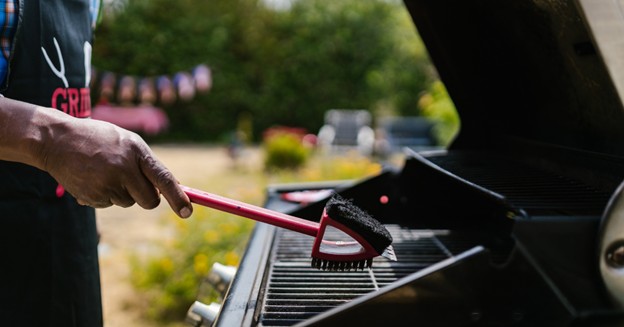
Texas summer BBQ season is about to take over your patio. Memorial Day is the first big test. July 4 is the second. Labor Day is the third, and somewhere between now and September, a fair number of premium-grill owners are going to lift the hood and feel their shoulders drop. Last year’s grease. A winter’s worth of carbon. Burner ports that haven’t fired evenly in months. The question that follows is almost always the same: how often to clean grill grates, burners, and the rest of it?
Here’s the short answer: most owners don’t expect it, but cleaning it the right number of times a year is what makes professional service cheaper than DIY over the lifespan of a $3,000 to $15,000 grill. In this guide, we’ll walk through the recommended frequency, what gets your grill ready for summer BBQ season, where DIY genuinely stops paying off, and why our grill maintenance program is built around exactly that pattern. We’ll clean the mess out of your grill!
Key Takeaways
- Twice a year is the floor, not the ceiling. Premium grills in Texas need spring service before summer hits, and a fall reset after football season.
- DIY hits a wall at Step 4. Brushing, scrubbing, and grease-tray dumps go only so far — the components that actually fail (burners, igniters, regulators) need professional access.
- Most grill fires aren’t dramatic, they’re preventable. The NFPA tracks over 11,000 home grill fires every year, and grease buildup causes most of them.
- A neglected $5,000 grill dies at year 6, not year 15. The math on skipping cleanings is brutal once you run it.
- Cleanings start at $295. Maintenance program members pay less every visit, get priority booking before Memorial Day, and see the same techs each time.
The Honest Cleaning Frequency Framework
The short answer to how often to clean grill components: every grill needs a quick clean after every cook, a deeper clean every 4–6 cooks, and a full professional cleaning at least once a year. Most premium-grill owners we work with — Lynx, Fire Magic, Kalamazoo, DCS, Weber, Traeger — call us two to four times a year, depending on how often their grills are used.
The honest version is more nuanced. A built-in outdoor kitchen used three nights a week through the Texas summer operates in a different world than a freestanding grill that fires up twice a month. How often to clean grill components really tracks with three things: how often the grill gets used, what’s being cooked, and how much investment you’re protecting.
Here’s the general framework we follow:
- After every cook: Brush the grates while still warm. Two minutes. You.
- Every 4–6 cooks: Deeper grate clean, grease tray empty, exterior wipe-down. Still you.
- Quarterly (heavy users): Full burner inspection, ignition check, interior degrease. This is where we come in.
- Annually at minimum: Professional deep clean with full disassembly and thorough degreasing. Always us.
For a Texas owner cooking through Memorial Day, July 4, Labor Day, and football season, the realistic cadence is twice a year minimum for professional service — once in spring, once after football season closes. That’s what our maintenance program is built around, because doing it twice a year is what makes a grill last twelve to fifteen years instead of five to seven.
Getting Your Grill Ready for Summer BBQ Season
Spring cleaning isn’t complete without your grill. The four-week stretch before Memorial Day weekend is the highest-leverage maintenance window of the year. A grill prepared properly in May runs cleanly through Labor Day and beyond.
The 4-week summer prep plan we recommend — and where we fit in:
- Week 1 (now — you): Walk-around inspection. Lift the hood. Look for visible grease pooling, rust on grates, gasket wear on ceramic cookers, and hose cracks on propane connections. Note what’s changed since fall.
- Week 2 (book us): Professional cleaning scheduled. The two weeks before Memorial Day are our busiest booking window of the year — same-week scheduling is rarely possible inside that window. Book now to get scheduled within the week.
- Week 3 (us): Professional cleaning and degreasing of the basin, with every component cleaned individually, ignition and valves inspected, and the exterior restored as close to like-new condition as possible. Two to four hours, on your patio, no mess left behind.
- Week 4 (you, with confidence): Memorial Day test cookout. Run the grill at full heat for 15 minutes before the first guest arrives. Catch any remaining issues on a weekday, not at 6 PM Saturday with 20 people on the patio.
That’s the rhythm built into our maintenance program. Members get pre-summer service scheduled automatically, with the same named technicians — Alejandro, Frederick, Daniel, Arnoldo, Jack, and Julio — on every visit. BBB A+ accredited since 2023, Winner of Distinction every year since. Over 10,000 grills serviced!
For grill cleaning in Houston specifically, the calculus is sharper still. Houston’s heat, humidity, and frequent entertaining mean grills get dirtier faster than in any other part of Texas. Pre-season prep isn’t optional. It’s the difference between a smooth summer and a July 4 service call.
What a Professional Cleaning Includes — and Why DIY Stops Paying Off at Step 4
There’s a wide gap between “I cleaned my grill” and “the grill was professionally cleaned.” Both phrases get used. Only one is true.
A post-cook brush-down removes loose food residue from the grates. It doesn’t touch flavorizer bars, burner ports, grease trays, ignition assemblies, or the heat shields underneath. A quarterly DIY clean — grates pulled, grease tray emptied, exterior wiped — gets further, but still leaves the components that actually fail (igniters, regulators, burners) untouched. That’s why we get the call after the failure.
A professional cleaning is a different category of work. Every professional grill cleaning service we run includes:
- Full disassembly — grates, flavorizer bars, heat shields, burners, and grease management pulled out and cleaned individually.
- Professional degreasing of basin — we remove baked-on carbon and grease that contributes to flare-ups and corrosion.
- Burner port inspection — clogged ports cause yellow flames, uneven heating, and flare-ups that scorch food.
- Ignition and valve check — the components most likely to fail before the grill’s body does.
- Stainless steel restoration — exterior polish that takes a Texas-summer-faded grill back to like-new condition. (See real before-and-afters in our gallery.)
The honest DIY ceiling for most premium owners is three steps:
- After every cook (2 min): Brush grates warm. Done.
- Every 4–6 cooks (20 min): Empty grease tray, wipe exterior, and deeper grate scrub. Inspect for grease pooling under burners.
- Quarterly (45–60 min): Pull grates and flavorizer bars. Inspect burner ports. Treat surface rust on grates. Our clean grill grates reference covers the grate-level technique in more detail.
Step 4 is where we come in. Professional degreasing and detailed cleaning of components is the dividing line between cleaning a grill and restoring one. Pressure washing isn’t a shortcut either — it forces water into electrical components that aren’t built for it. Our techs service Weber and premium built-ins across the Houston market every week, and the most common avoidable failure they see is a clogged burner port that an owner mistook for a regulator issue. Twenty minutes of our time on Step 4 prevents it. Six months of waiting turns it into a repair job.
Step 4 also catches grills that aren’t worth saving. We have walked away from a few over the years — when restoration cost outpaces replacement value, we say so. The “honest assessment” line in our reviews isn’t marketing copy. It’s the actual call we’d rather make than upsell you a service that won’t deliver.
The Fire Risk Hiding in a Dirty Grill — and Why We Inspect for It Every Visit
Grease buildup is the most common cause of grill fires, and it’s the most preventable. According to the National Fire Protection Association, U.S. fire departments respond to an annual average of 11,421 home fires involving grills, hibachis, or barbecues — resulting in 176 reported civilian injuries and $172 million in direct property damage every year. The U.S. Consumer Product Safety Commission reports an additional 22,000+ emergency room visits annually for grill-related injuries.
The risk profile of a premium grill is actually higher than that of a budget model. Built-in grills sit closer to combustible materials — cabinets, siding, eaves on covered patios. Outdoor kitchen suites concentrate grease drainage in tight enclosures. A grease tray that hasn’t been emptied in three months and a burner with clogged ports is a fire waiting for a Tuesday-night steak.
This is exactly why every cleaning we do includes a full safety inspection — grease management, burner ports, valve assemblies, hose connections, and ignition. The cleaning is the visible deliverable. The inspection is the part that costs you a fraction of professional service and saves you a grill repair call (or worse) later. We’ll publish a deeper post on grease fire risks in July.
Frequently Asked Questions
Grill Cleaning Frequency by Type
How often should you clean your gas grill?
How often should you clean your BBQ grill?
How often should you clean grill grates?
How often should you clean your grill overall?
Summer BBQ Season Prep
How do I prep my grill for grilling season?
What's the best time of year to clean your grill in Houston?
How long does a grill cleaning take?
What Happens When You Don’t Clean
What happens if you never clean your BBQ grill?
Can a dirty grill make you sick?
Is grill grease really dangerous?
Cost, Value, and the Program Decision
How much does grill cleaning cost?
Is professional grill cleaning worth it?
Should I sign up for a grill maintenance plan?
Next Steps: Three Ways to Get Started
For premium-grill and outdoor kitchen owners across Texas, the simplest answer to how often to clean the grill — and how to actually do it without overthinking — is structured. Set the cadence, schedule the pro service, and stop thinking about it. We’ll clean the mess out of your grill. Three ways to start:
- Join the program → See our grill maintenance program options (priority booking, member pricing, same techs every visit)
- Book a one-time cleaning → Starting at $295.00. The entry point where most program members start.
- Talk to a grill guy in your region:
• Houston / College Station: (281) 586-2100
• Austin / San Antonio / Hill Country: (512) 212-1230
• Lubbock: (806) 301-2324
The four weeks before Memorial Day are exactly the moment to lock it in for summer. Whichever path you pick, we’ll be at your house, not your grill in our shop.
About the Author
Tony Thomas is the co-owner of The Grill Guys USA, a BBB A+ accredited (since May 2023) and BBB Winner of Distinction grill cleaning and repair company. Tony founded the company in 2020 with two high school friends who shared a passion for outdoor cooking, and has spent the last six years building Texas’s premier mobile grill restoration service. Tony and his team built a cleaning system that brings professional-grade grill restoration directly to customers’ homes in Greater Houston, Austin, San Antonio, the Hill Country, College Station, and Lubbock. The Grill Guys USA is a partner of many grill manufacturers.